disengage.ca a quest for the technomadic lifestyle

27Oct/101

What I Did On My Summer Vacation – June Edition

It's been six months since I've updated my blog, and much has changed.  So much, in fact, that the sheer amount of things I have to write about has been preventing me from writing at all!  I've resigned myself to the fact that many of this summer's great adventure stories will have to remain untold, and that I will just have to tell the biggest story - and in the spirit of 'worth a thousand words', I think the story is best told as a series of photographs, with a descriptive paragraph for each.  There are eighty-six photographs in total, and that's after having culled and cut and edited out well over half of them.  Most of these photos are lower quality, all that remains from my iPhone's 'Facebook' application.

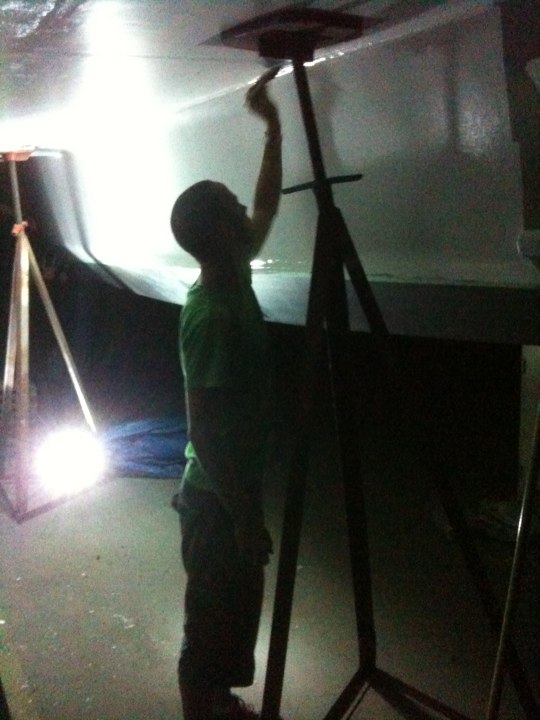
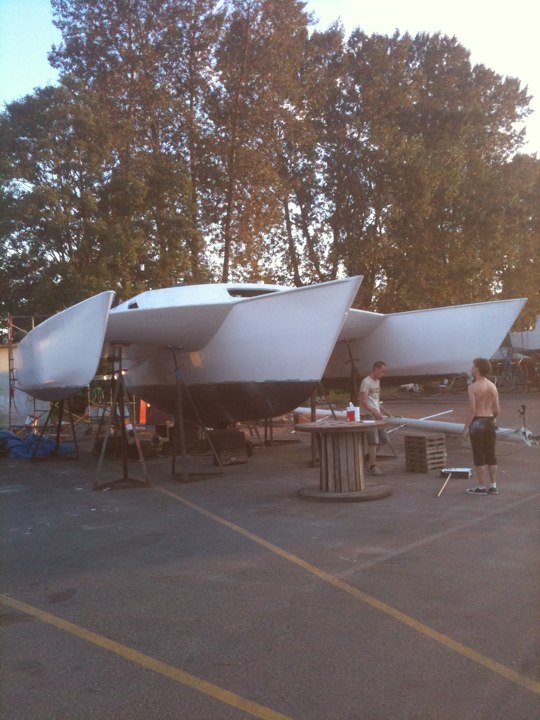
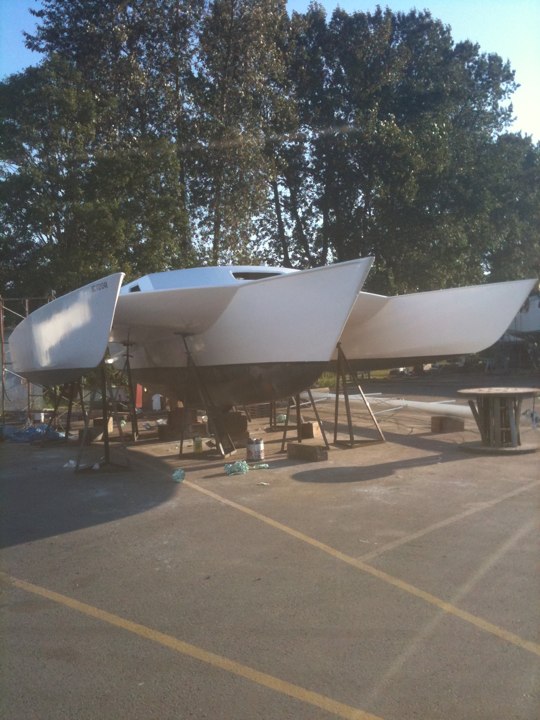
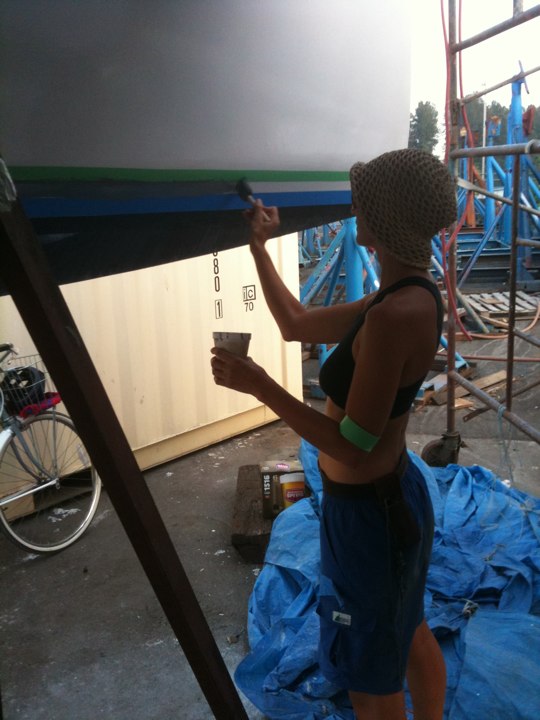
The short version: I planned to haul Tie Fighter out of the water for a two-week intensive repair and paintjob session, and those two weeks turned into a grueling sixty-five day slog, working ten or more hours per day in the hot sun with a total of five days off over more than two months.  Fortunately the weather cooperated, if you count blisteringly hot sun as cooperation...

Without further ado, I present to you "What I Did On My Summer Vacation", the June edition.  If you're reading this on Facebook, I strongly suggest you visit my main blog site (http://www.disengage.ca) for the original formatting.

Ernst at the helm

Ernst at the helm

Given the ongoing problems with my engine overheating, I figured it was probably prudent to enlist some help with the travel from Kitsilano up to the boatyard that I'd be working in, Shelter Island Marina in Richmond, BC.  They were chosen because they are the only boatyard in the lower mainland with a travelift capable of hauling out a boat the width of Tie Fighter!

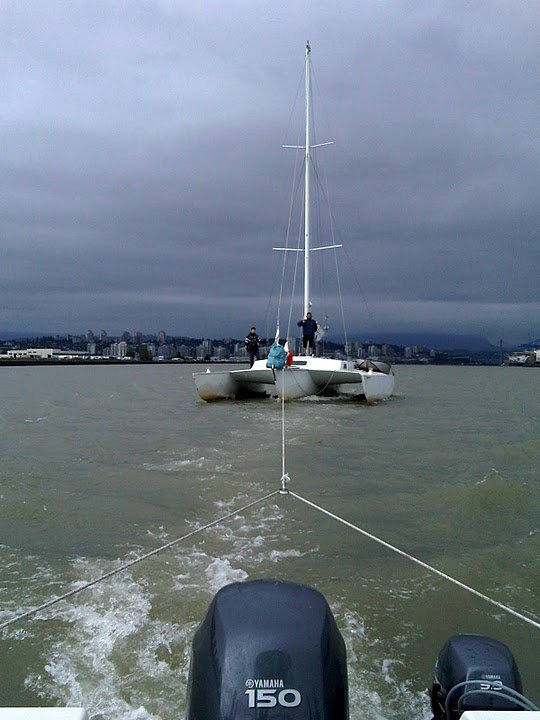
towing Tie Fighter behind the Foulkeswagen

towing Tie Fighter behind the Foulkeswagen

My friend John Foulkes offered to give me a tow up the Fraser River with his powerboat, and so Ernst and I sailed Tie Fighter out around UBC and to the river mouth, then attached a line to John's boat (the Foulkeswagen) and headed up the river.  Aside from a near miss of the banks during a daring coffee-relay mission between the two vessels, the trip was peaceful and uneventful.

approaching the lift

approaching the lift

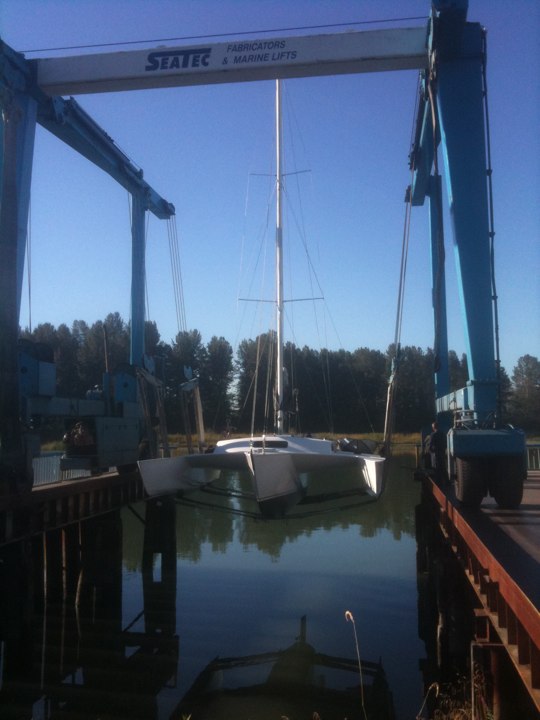
I spent the night on the Shelter Island docks, then in the morning I motored up to the lifting dock...

travelift lifting Tie Fighter out of the water

travelift lifting Tie Fighter out of the water

...where I was lifted up...

out of the water

out of the water

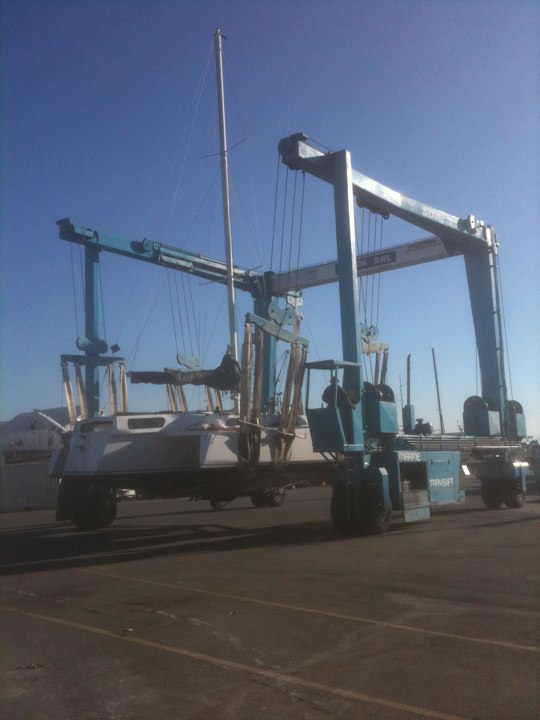
carrying Tie Fighter across the boatyard

carrying Tie Fighter across the boatyard

...carried across the boatyard...

washdown guy in hazmat suit

washdown guy in hazmat suit

...powerwashed, and...

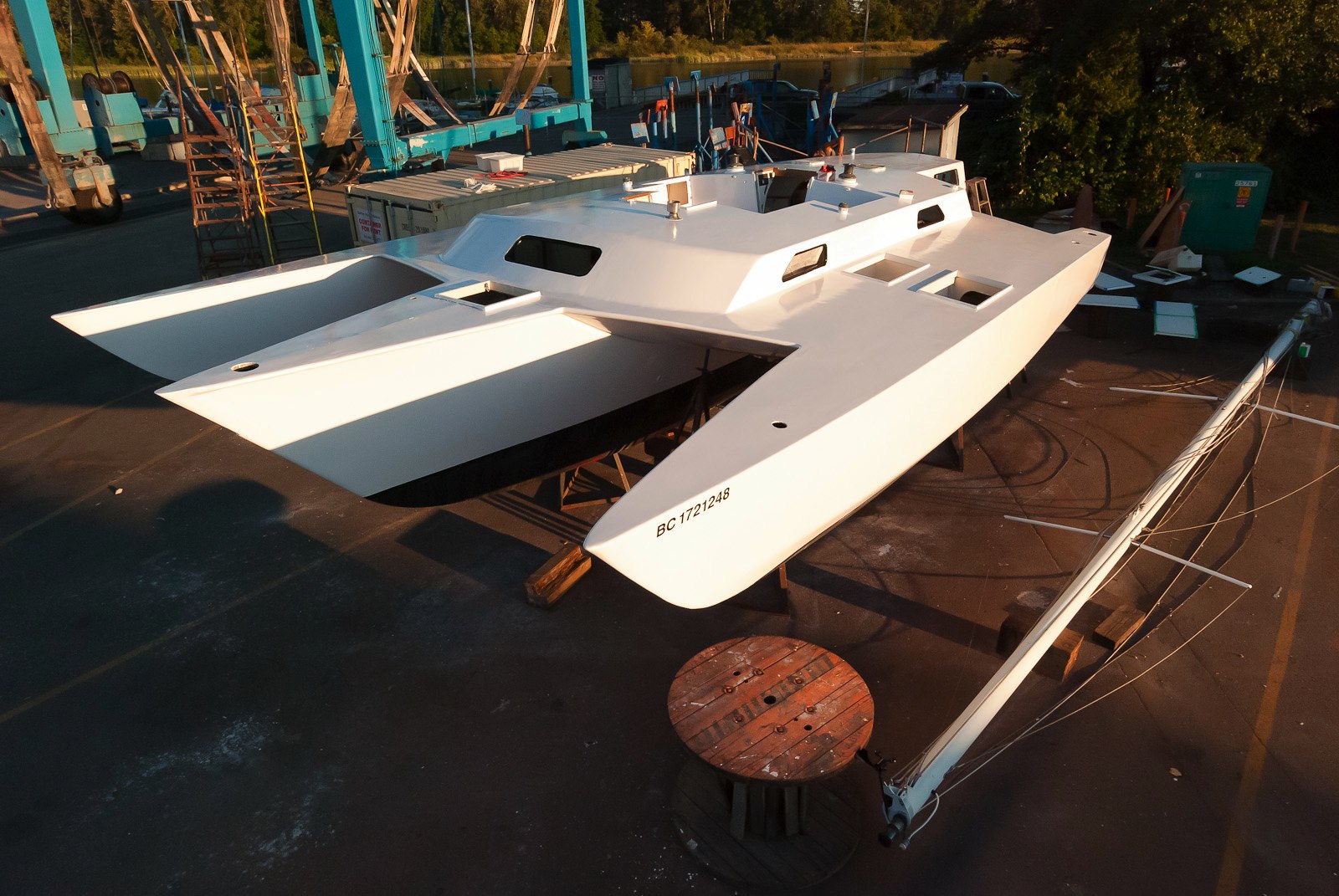
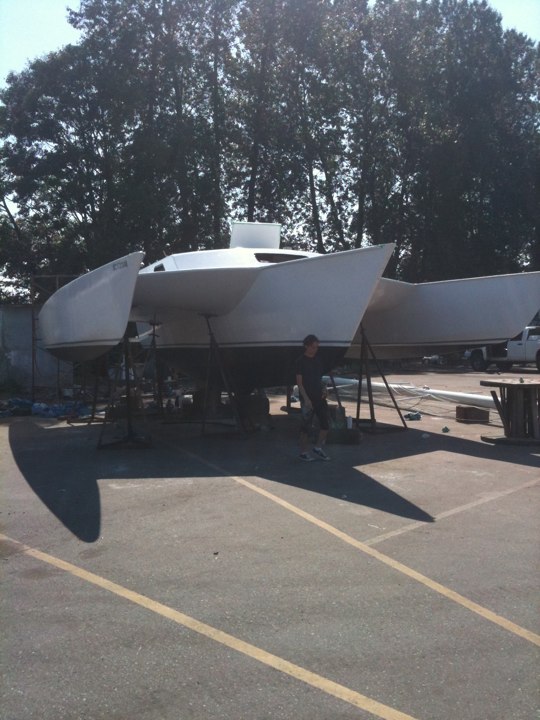
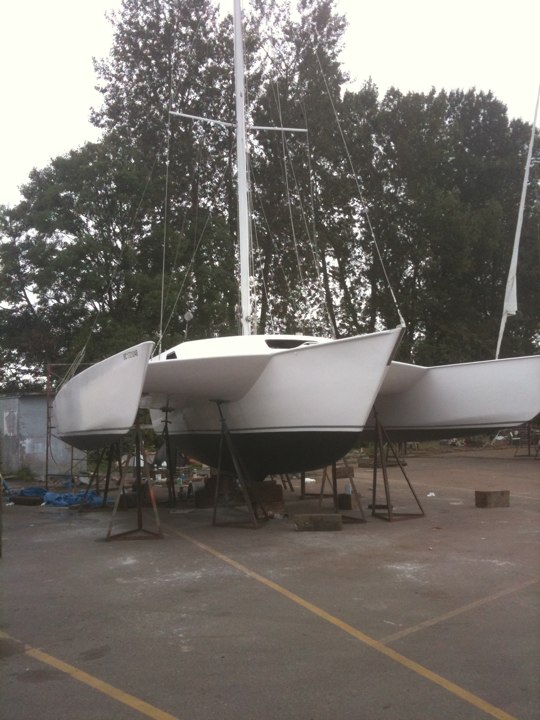
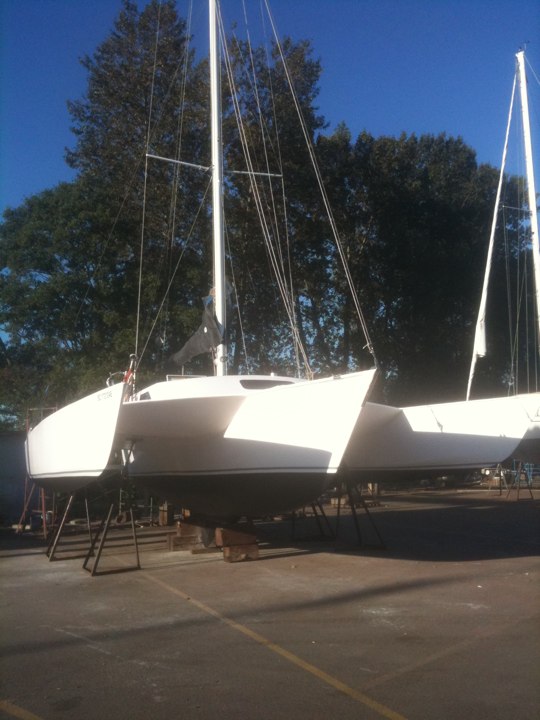
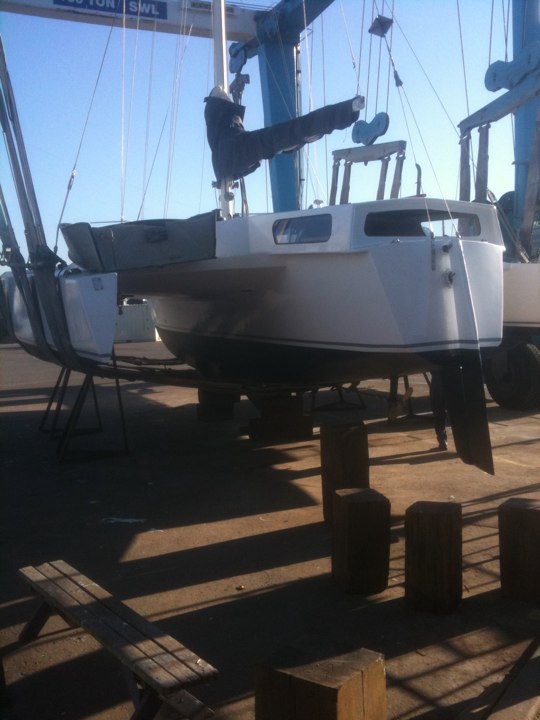
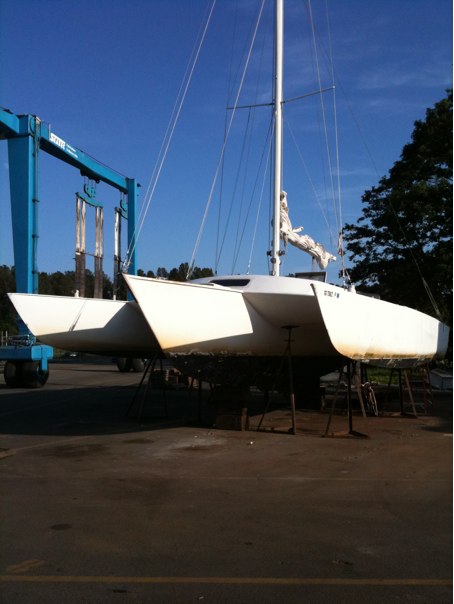
Tie Fighter blocked and ready for work

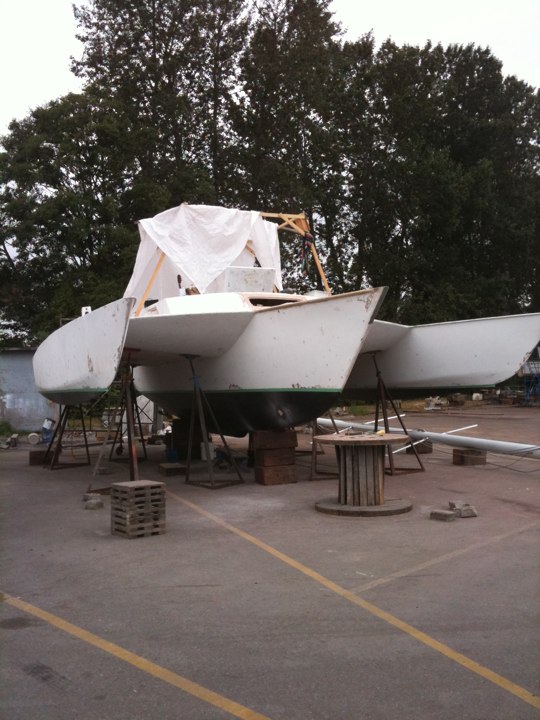
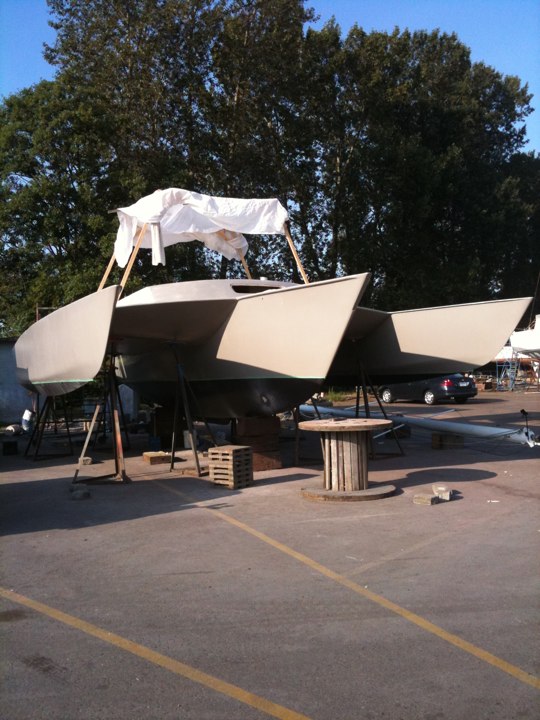
...finally set down gently on metal stands, ready to be worked on.

At this point I honestly did think that I'd only be out for a total of two weeks, but everyone who asked about it laughed when I told them my schedule and predictions of how long it would take.  One guy, a fellow geek, actually recommended I take all my predictions regarding time and money to be spent, add a worst-case scenario, and then multiply it all by 'pi'.  Strangely his predictions were the most accurate of anyone.

stuck centerboard, meet physics

stuck centerboard, meet physics

The first task was to remove the centerboard, though of course it didn't want to come out.  At some point, some previous owner hit some rocks and damaged the fiberglass bottom edge of the board - the wooden centerboard absorbed seawater and swelled up, causing it to stick in the centerboard trunk.  Two days, a lot of rocking, some serious leverage provided by halyards and block-and-tackle, and a bottle of extra virgin olive oil later... she came out.

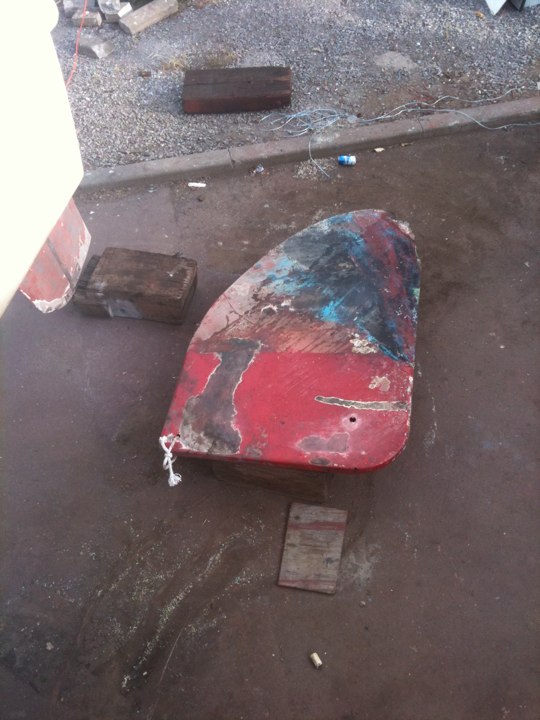
the centerboard, out on the ground

the centerboard finally out

Six hundred pounds of centerboard doesn't move around too easily!  Ugh, three different layers of anti-fouling paint, old fiberglass, wood fibers and several years of marine growth - this piece of wood was foul.  We drilled a bunch of drainage holes in the board and propped it up on wood blocks "for a few days".  Little did we know, it would be there for almost two months.

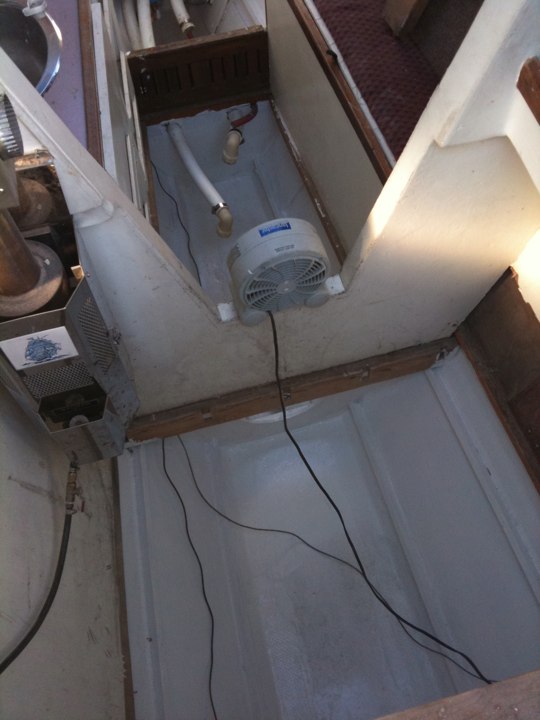
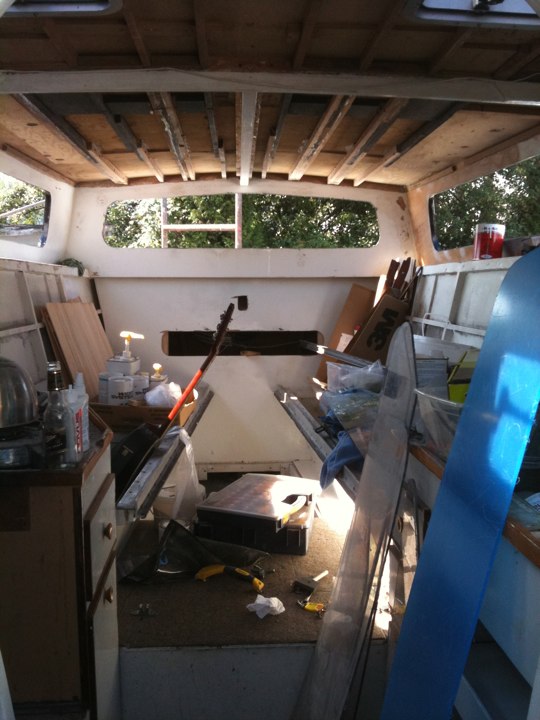
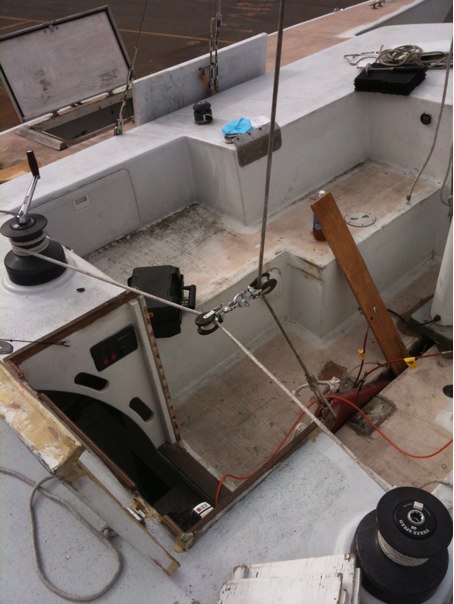
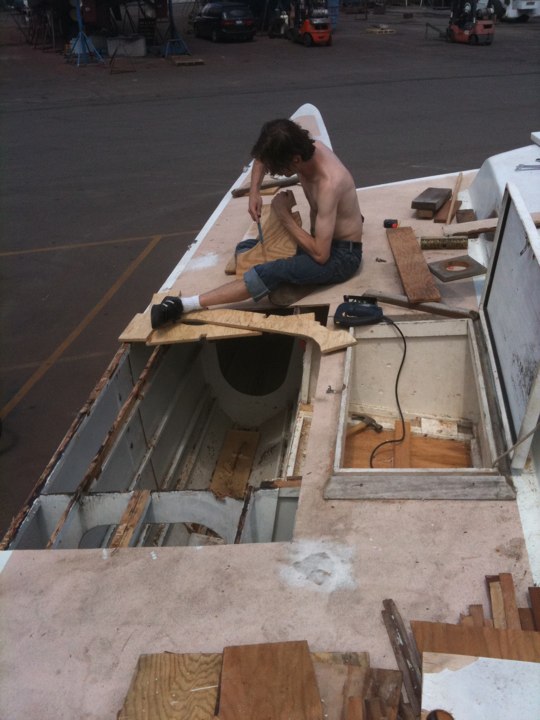
One of the first major projects was to repair a "tiny, little 6-inch spot of rot" in one of the port ama bulkheads.  Of course, we quickly learned that as soon as you can spot any rot, there's a lot more that you can't see... and the project turned into a bulkhead, support beams, an inside panel and several feet of decking!

DR tracing out a new bulkhead

My close friend Dan Ross spent a large portion of the summer out in the boatyard with me, helping to repair the boat.  His work ethic and good humour kept me both motivated and sane through the long, hot days on the asphalt.

DR fitting the replacement bulkhead
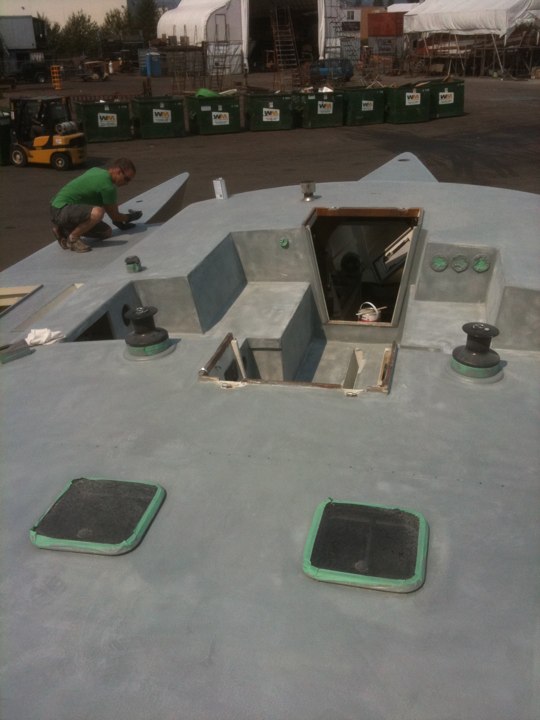
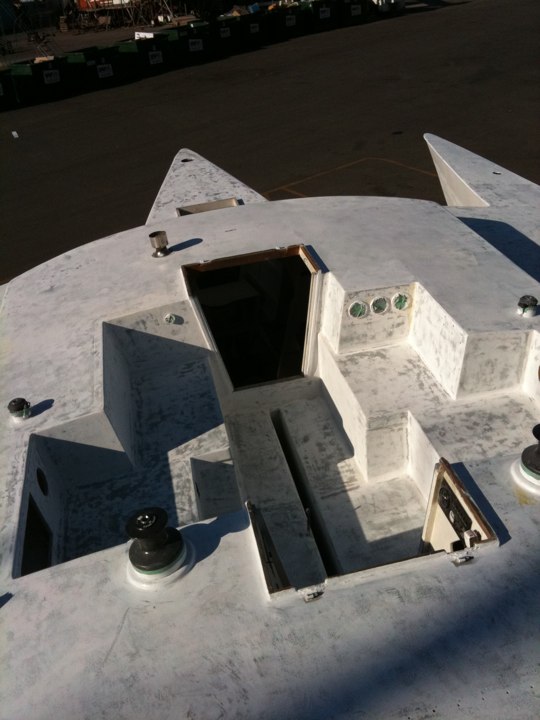
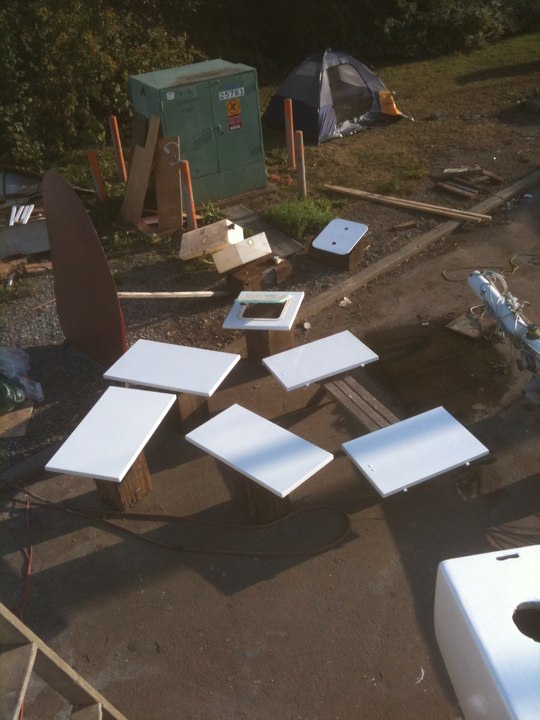
In the photo above you can also see the line locker, the open hatch on the right.  Originally this had been a locker for a life raft, accessable from below the wing should the boat ever capsize... but of course, the hatch wasn't installed well, and subsequently it rotted.  We removed the hatch and built up the locker as a proper watertight line locker, by replacing about fifteen square feet of the underside of the wing, then building a new floor into the locker over top of that.
port ama hatch rebuilt, awaiting fiberglass
Miya on the starboard bow

During this time I also had other friends visiting and helping quite often - here's a pic of my lovely girlfriend Miya working on the starboard bow.  At first we tried to remove the old anti-skid paint with sandpaper and then with an angle grinder, but the sheer amount of work to do so was staggering.  In the end, we found that methyl ethyl ketone (MEK) was the answer - the anti-skid paint dissolved under the solvent!

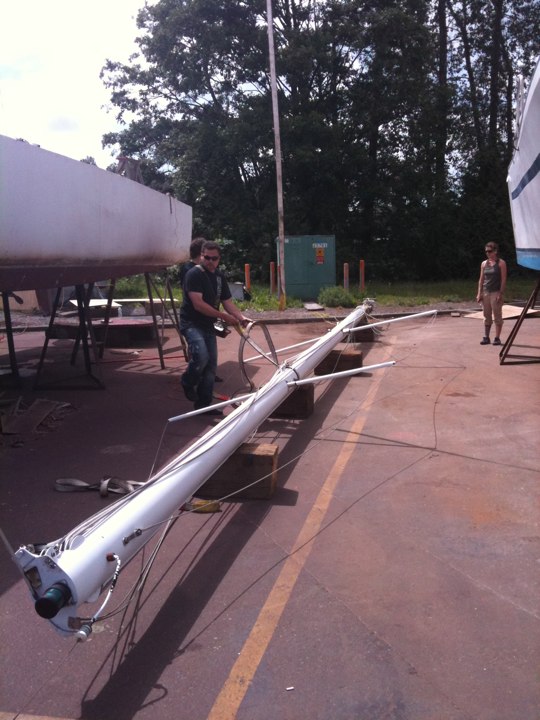
Miya, Teak and DR pulling up the mast

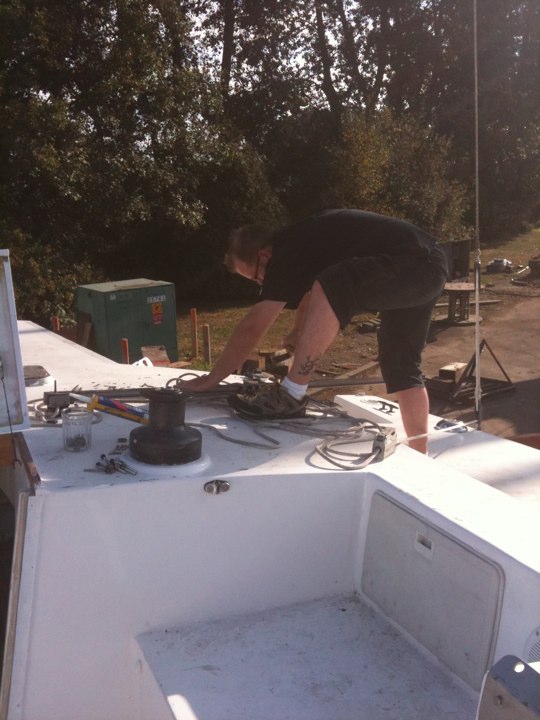
We also removed the mast and rigging, both so that I could inspect and upgrade the mast head equipment and so that we could get access to the centerboard trunk, the largest and most complicated rot problem of all...

the mast on the ground
lots of rot in the mast step!

Above you see the mast step, which essentially collapsed as soon as I applied a little pressure to it.  I'm very fortunate that it never collapsed on me while I was at sail, though I'm pretty sure that I would have had problems if I'd left this project for another year.

the rain cover built and installed

As the Canada Day weekend approached, bringing June to a close, the weather forecast showed a prediction of rain.  With a quick run to Home Depot for lumber and a tarp, we built a rain cover over the worksite - which had the side effect of giving us some much-needed shade on what would prove to be the hottest days of the summer.

And so ended the month of June.  I'll try to add the subsequent posts, with the photos from July and August in a timely fashion, but my world seems to be accelerating currently, so no promises. :)

1Feb/105

A Quick One

Well, I made it out of False Creek.  I can't exactly say I made it unscathed, as I managed to somehow burn out (part of) my exhaust system again - but at least I'm out, and out of the immediate danger of being towed away and impounded by the VPD.  Instead, now I am broken down at anchor about 300m due west of the Maritime Museum, bobbing around in the wake of every ship that enters or leaves False Creek, and potentially in danger should the weather turn foul.  Tomorrow I will be picking up a few replacement parts that will help get me up and running again and over to a slightly more comfortable spot.

hoooooovercraft

completely unrelated: Friday morning I was woken up by yet *another* hovercraft. how awesome is this photo!?

I think I actually know what's going on now.  At some point, X minutes after pushing the engine hard, the cooling water ceases to flow into the exhaust and the superheated exhaust burns a hole in the tubes.  There are a pair of thermostats that redirect the water flow from the exhaust manifold and into the main engine block once they heat up, though the water should then flow into the exhaust manifold and out the exhaust.  I now suspect that the engine block has become fouled with calcium scale, and now water no longer flows through it.  Fixing this will likely require a heavy-duty descaling solution, or perhaps straight-up muriatic acid.  It's a touchy procedure, but there is hope - I may have finally sorted out a way to barter myself some time with a proper diesel mechanic!

More soon.  I simply have too much work to do to write proper, long blog posts right now.

UPDATE: Swapped in an edited version of the hovercraft shot, with levels and curves tweaked by Jason Sims.  Nice one!

31Jan/100

Stress

I started to write a blog post on Friday morning, but by Saturday evening the still-open browser window - the blog editor page with just the word "Stress" written in the title box - had become its own succinct review of the events of those two days.  I won't bore you with the details, but the main point is that after some fast talking, the VPD granted me another couple of days to get my engine going.  I spent most of the weekend working on her, and as of now I am reasonably confident (though knocking wood) that she is working well enough to get me the heck out of Dodge.

A quick highlight reel - in the past three days, I:

  • bicycled over forty kilometers and rowed over eight kilometers in total,
  • borrowed a truck and drove to Bellingham and back for engine parts,
  • had my oil filter spring a leak, leaving me with a couple of liters of used engine oil in my bilge,
  • spent over $700 on a new exhaust system, and assembled and installed it,
  • ate six cans of sardines and probably over a pound of sliced ham,
  • drank most of a bottle of Sailor Jerry, and
  • went out dancing.  Twice.

Tomorrow morning I try once more to escape the Creek.  My first destination will be Kitsilano.

8Dec/091

Engine Battle: TKO!

I may not be warm, but at least I have an engine that starts.

Ok seriously, it's fracking cold out here.  The past few days the temperature has dropped further and further, and as I write this it is 6pm, pitch dark outside and -6°C.  I know some of you are reading this from the Prairies or the Maritimes, where the ambient temperature has been hovering around -20°C, but I'm going to go ahead and assume that you also have furnaces and insulation and such.  Tie Fighter is made of 3/8" marine-grade plywood over cedar stringers, with an R-value of... god, I have no idea.  Not enough, anyway.  It's COLD.

click to view larger - can you spot the outline of the (heated) cabin vs. the outline of the (unheated) closet?

click to view larger - can you spot the outline of the (heated) cabin vs. the outline of the (unheated) closet?

I've had some questions posed about insulating the boat, and the short answer is:  I'm still researching.  One school of thought says that the only way to insulate a wooden boat is to use foam rubber, and bond the foam directly to the wood, being careful not to leave any air gaps between the wood and the foam.  The reasoning is that if you leave air gaps, you're inviting condensation, which to wood means mildew or eventually rot.

The other school says that you should never bond anything to the wood, because that makes it much more difficult to notice problems, and a helluva mess to work with.  They say to rather allow it to breathe and stack insulation over top that can have air forced in behind it via fans or blowers, so that the condensation can dry up on its own.

What am I going to do?  I have no idea.  I'm still soliciting opinions from various liveaboard forums and fellow False Creek denizens.  For now, I'm toughing it out and burning several different forms of fossil fuels at the same time trying to stay warm.  When I woke up this morning I had to break up the ice in the sink dishes before I could make breakfast.

Cold aside, I HAVE A WORKING ENGINE AGAIN!  The diesel engine theory class paid off in spades, and I was able to diagnose the problem, correct the situation, and get Maude started.  This was a huge boost to my confidence and self-esteem, especially given the nature of the problem and my previous (complete lack of) experience with engines.

To recap; Maude had started to lose power at some point during my last run up to fill my water tanks.  The change was gradual but immediately noticible; the engine dropped in power without my touching the throttle, which is up there with "sounds different" or "emitting smoke" or "smells funny" on the diesel engine scale of uh-ohs.  Not quite 'explosion', but definitely not good.

The most immediate difference between my response to this problem after having completed the diesel theory class vs. my response before the diesel class is that I now have any response at all other than ignoring the problem and hoping that it will resolve itself.  Carrie once said to me "I don't deal with little problems anymore.  Little problems either go away on their own, or they become big problems.  I deal with big problems.".  I took this somewhat to heart, but I have come to realize that that philosophy can only apply to some aspects of life; in other situations - diesel engines being a noteworthy example - it's best to deal with little problems immediately and with extreme prejudice.  Don't just solve problems, smash them out of existence with the largest hammer you can find.

the fuel lift pump, source of my woes

the fuel lift pump, source of my woes

Maude had started to lose power, and I ignored it.  The next time I tried to go for water,  Maude died about four minutes into the voyage.  Fortunately the incoming tide pushed me directly back over my anchoring spot, or I would have had to radio the Coast Guard for assistance.  Attempting to restart her seemed to work intermittently, she'd start but die as soon as I applied any throttle, which is exactly the behavior one would expect from water in the fuel lines.  The answer there would be to drain the water from the fuel lines, bleed the lines of any newly-introduced air, and then restart the engine - bearing in mind that the "bleed the lines" portion of that answer is an eleven-step procedure requiring three different sizes of wrench.

Needless to say, I was unsuccessful with the bleeding of the lines.  For the life of me, I could not seem to get the air out of the lines; I must have pushed that little fuel lift pump lever tens of thousands of times, blistering and scraping my hands in the process.  Nothing seemed to work!

Fortunately I had signed up weeks before for the Cooper Boating 'Advanced Diesel Theory' class, and so I went to class and paid close attention, asking so many questions that I'm sure the teacher is glad to be rid of me.  Each week I returned from class with fresh resolve and a new set of hints, and spent a few hours poking at the engine trying to figure out what part of the bleeding process I was doing wrong.  Each week I was unsuccessful.

After five straight weeks trying to perform the relatively simple process of bleeding the lines, I decided that I was doing it right and that there must be something actually wrong with the process.  I decided to take each part in turn and track out the problem, just like I'd do with a computer issue.  Eventually this led me to a conclusion:  the fuel lift pump just wasn't lifting fuel.

source of the problems, click for closeup

source of the problems, click for closeup

Long story short, I pulled the fuel lift pump off the engine and disassembled it on my kitchen table.  I found that the input valve assembly was clogged in the 'open' position with a motley assortment of plastic scraps, gelled diesel and hair(?!), which I removed.  This was clearly a result of the stock fuel filter having been removed by a previous mechanic and a third-party fuel filter installed instead, after the fuel lift pump instead of before it.  I cleaned up the pump, tested and reinstalled it, changing the location of the fuel filter along the way - but still I had no fuel flow!

Finally, after putting together a bit of critical information from the instructor along with a tidbit from the guys at Stem to Stern, I realized that the copper washers in the banjo bolts connecting the fuel lift pump to the fuel lines must be letting air into the lines.  I replaced the copper washers, tightened up the banjo bolts, and suddenly fuel began to flow.  I performed the rest of the air-bleed procedure, cranked the engine, and low and behold Maude shuddered to life.

Anyhow.  I have an engine again, though I haven't yet installed the secondary fuel filter I purchased, nor replaced the belts, nor replaced the exhaust tank.  I have yet to change the oil, either in the engine block or in the transmission.  I haven't even begun to reroute the cooling system, changing it over from raw seawater to antifreeze - but all of these projects will come.  I have a working engine, and with a little luck I can keep it that way.  I am no longer afraid of Maude.  The engine is no longer a black box.

Just to add to the stress of the bitter cold, the police have just motored past in their 'R.G. McBeath' policeboat, which is the one they use to enforce the anchoring bylaws - they didn't stop by to chat, but they're weaving in around the anchored boats, making their presence known.  I don't have any idea what is going to happen to those of us squatting here in False Creek.  I suspect we'll all be kicked out prior to the Olympics, but I don't have any good ideas on where to go after that - there really aren't any other good, sheltered anchorages around Vancouver.  The hard winter might shortly become much, much harder.

26Nov/092

Stuff and Nonsense

Ok, ok.  You're right.  I'm slacking and not updating the blog.

I'm not sure what the real reason is.  I've been maddeningly busy, the kind of busy where it seems like every spare minute is taken up but nothing seems to be getting accomplished.  Still, that's not to say that life halts, and as such I've got a whole pile of micro-updates that I probably should have been posting all along.  Nothing important or earth-shattering, no crazy adventures, just the usual day-to-day crap.  Each of these stories should be its own update though, I just have to stop procrastinating and letting them pile up.

False Creek at night in the rain.  admittedly gorgeous.  I love my neighborhood.

False Creek at night in the rain. admittedly gorgeous. I love my neighborhood.

To start off with, if you're reading this from somewhere other than Vancouver, British Columbia, you might not realize that it's been raining for something like fifteen goddamned days in a friggin' row. I know that complaining about the rain is one of Vancouver's favourite pastimes, and I knew getting into this that the rain would be something I'd have to face up to sooner or later. It's not actually all that bad, once you realize that "being stylish" and "being comfortable" are mutually exclusive. I've gotten used to living in my tall, bright yellow rubber boots, and leaving the boat without wearing rainpants seems pretty silly these days.  Wet clothes hung up to dry can take days to dry on a boat - my sweaters are still damp from laundry day, which was a week ago tomorrow.

The thing about rainpants and raincoats is that they look pretty dorky, but they really work.  I have yet to find any that are waterproof, breathable, and look acceptable in public - it seems like you get your choice of any two of those features.  I'm willing to pay extra for the good stuff, especially seeing as I use them pretty much every day!  I have one set of Helly Hansen raingear that was quite pricy, but it has already paid for itself many times over just through regular use.  The other day I caught the pantleg in the chainring of my track bike, pulling it almost the entire way around - but when I unwound myself and pulled it free, the most damage was a bit of chain grease; the rubbery material itself didn't tear at all.

can you see the four or five inches of water in there?  probably a hundred liters overall.

see the four or five inches of water in there? that's probably a hundred liters overall.

Every day that I go ashore - which isn't every day, mind you - I have to climb down into my rowboat and bail out the rainwater.  I use a plastic bucket made from a cut-off 1.89l bottle of blueberry cocktail, which I assume to be roughly 1l in size, and to stave off the bitter cold and monotony of bailing, I count the buckets as I empty them over the side.  My record to date is 120l of water in the rowboat from one night of rain.  Seriously!  I need to track down and cut up a bleach jug or something similar, bailing at 1l per stroke isn't the most efficient solution.

One nice thing about my rowboat is that there are large chunks of foam rubber bolted to the inside of the gunwales, which I'm guessing are supposed to keep the boat afloat and upright even if it fills completely with water.  This is reassuring - there are a bunch of other boats in False Creek, many of which aren't liveaboards and the owners don't come down very often to check on them.  Those folks have dinghies locked to the nearby dock, but the rain tends to fill the dinghies up and sink them ever few weeks.   Last week, one such boat belonging to my friend Eric had sunk in this manner.  When I returned home from a night on the town, I heard strange splintering, cracking noises from the dock as I came down the ramp - it turned out to be Eric's dinghy, sunken and trapped lengthwise between the heavy wooden dock and the rocky bottom.  The tide was almost all the way out, but it still had a foot or so to go...  and the noise was Eric's little fiberglass rowboat, cracking and folding under the massive weight of the dock.  Sad, but there was nothing I could do to help.

mmmm, hot cast iron

mmmm, hot cast iron

It has also been cold lately, and as you've probably guessed from my last post, I've been fighting with my furnaces again. The warmth from a diesel stove is delightful... when it works. I heard someone on another forum describe diesel stoves as "more of a hobby than an appliance", and that pretty much sums it up.  Twitchy things, these machines, and at times it almost feels more like I'm learning to play a new musical instrument than trying to heat a boat.  They constantly remind me that they must be treated with respect - as I type this I have yet another slowly-blistering burn on my forearm from touching the wrong part of the oven door while toasting a bagel in the stove an hour or so ago.

When diesel stoves and heaters are working perfectly they're lovely, but when they start to work badly it's a slippery slope... give them a bit too much or a bit too little fuel and they're inefficient, dirty, smelly and can even be dangerous.  I'd been feeding the main stove a bit too much fuel, and it responded by filling up with soot.  The last time I had an overabundance of soot, I used my little wet/dry shop-vac to clean it out.  I was absolutely pleased as punch with the results - until I noticed that every bit of soot that I'd removed from the stove had been blown straight out the back of the shop-vac and all over the cabin, creating a nightmare of a mess to try to clean up.  It was literally weeks before I got the last of it - and actually, from where I sit in the aft cabin right now I can see at least two spots where there is still soot from that fiasco.

This time I did not intend to make the same mistake - I researched shop-vacs and soot on the internet, and came to the realization that the root of my problem was simply a lack of a filter device on the shop-vac.  Since I could not find any information about my 'Stinger' shop-vac on the internet, I made a plan to purchase a newer, more appropriate shop-vac - but when I went to the Home Depot to pick one out, I found that my 'Stinger' had merely been renamed to 'Husky', and the colours changed.  This certainly wasn't obvious from their website!  Fortunately, the Husky model had filters available, and for a whopping $6.99 I left the Home Depot with a filter and a vision of a clean stove.

And it worked!  Well, mostly anyway - the stove is now clean and there wasn't a major mess to clean up afterwards.  It still wasn't a simple or tidy job, and all of my cuticles are still as black as night, but the stove is once again safe and clean-burning.  The only real downside is that the filter didn't seem to get *all* of the soot - I didn't notice any in the air, but when I blew my nose later on I was startled by a pair of jet-black spots on the tissue.  *sigh*.

In other news, I've been spending my quieter evenings watching movies I've purchased from The Sailing Channel - and actually, I'm really torn here.  The Sailing Channel has made their DVD movies available for $29.99 USD plus shipping, or you can download them for $12.99.  Wow!  That is some seriously forward thinking for a niche video company, and I'm very happy to help support them; I have purchased four downloaded movies so far and will likely purchase more.  The part that tears me a little is that for such a forward-thinking company, their website is hideous.  Seriously.

One of the movies, Lin and Larry Pardey's "Get Ready to Cruise", had a bunch of tips that I'd already figured out on my own, but there were two in particular that were each alone worth the price of the video download.  One of the tips involved seat cushions in the salon, which I won't bother to explain here (yet, perhaps I'll blog it when I implement it) - but the other was a simple and effective way to build a shower on a sailboat!

9.5 liters of pure, unadulterated cleanliness

9.5 liters of pure, unadulterated cleanliness

I've been working a bit on that tip, and while I've still got a little ways to go I'm nearing completion.  The premise is simple: use a basic pesticide sprayer, and refit it with a longer hose and a showerhead attachment with a simple valve assembly.  I've expanded on the idea a bit, and replaced the 1/8" feed tube in the sprayer with a 1/4" stainless steel version, which should give me significantly more water flow, making it even more like a real shower.  I also chose a black plastic canister, which should mean that in summertime I can just fill the canister with water and leave it outside in the sun and in a few hours I'll have a hot shower.  In the meantime, I'll have to boil a pot of water on the stove, but given that there's usually a pot of water on the stove for tea anyway, I don't feel like this is a particular hardship.

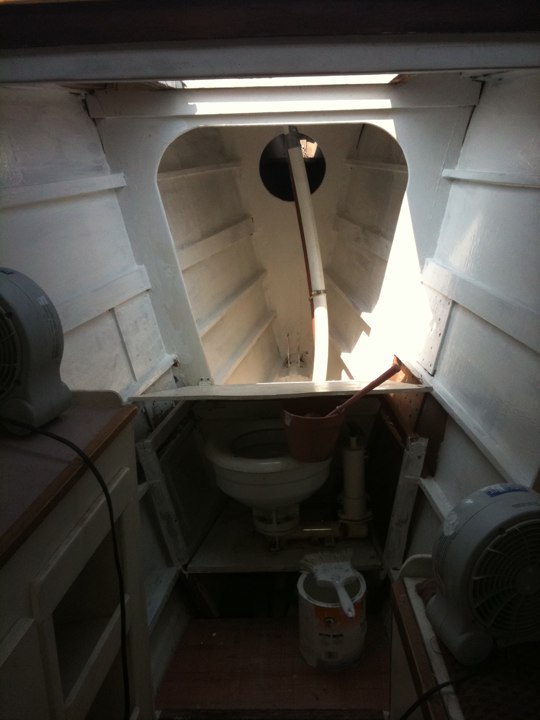
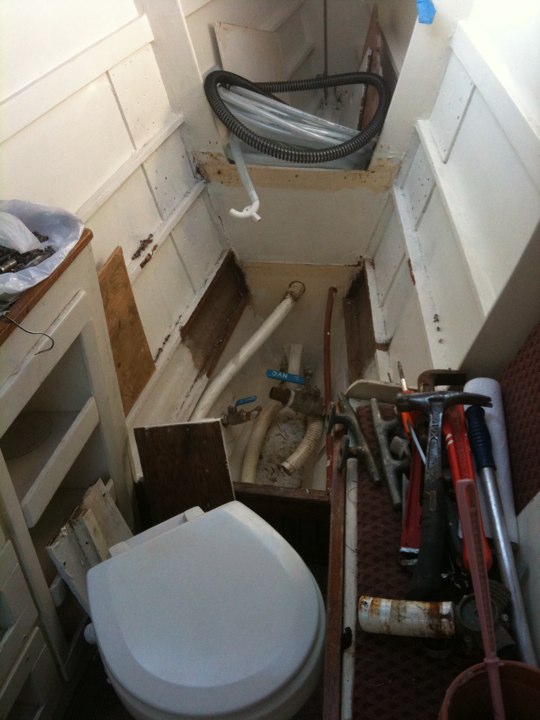
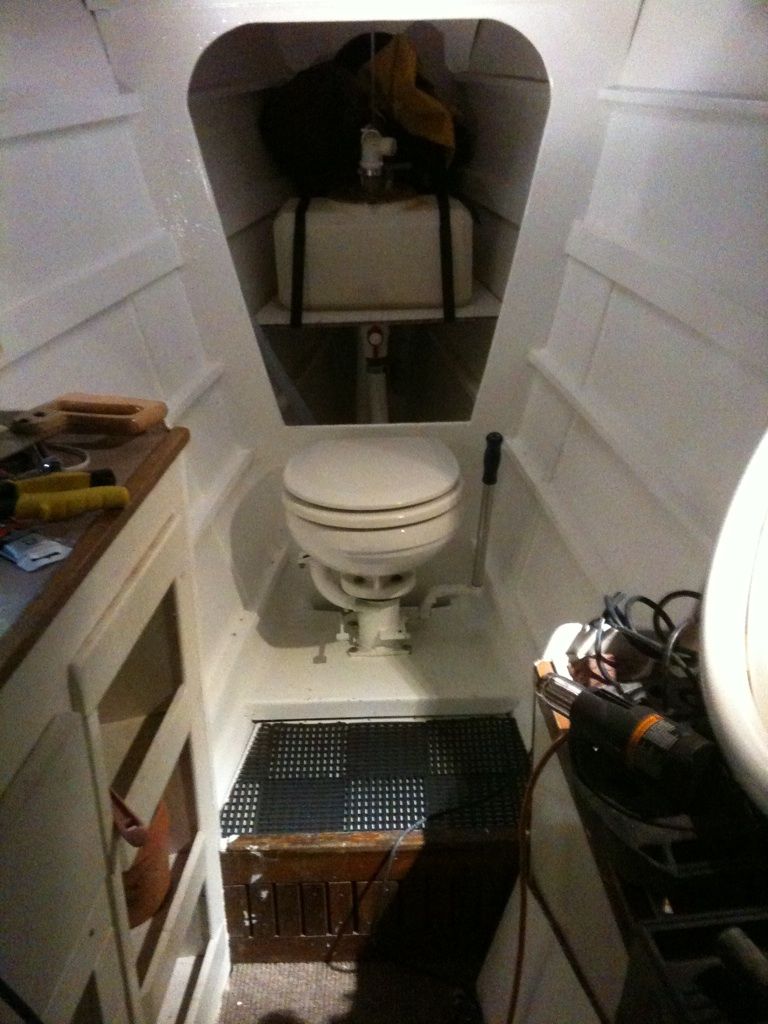
After you've got the mechanics sorted, all you need is a spot in your boat configured to handle a bit of water splashing around and you've got a shower!  My boat has just such a place - the bathroom, or 'head', right at the front of the boat has waterproofed walls, raised bulkheads and a simple floor to catch the water.

The remaining parts, before I can finally have a shower on the boat, are pretty easy - I need a piece of hose, I need to replace the carpeting in the head with some kind of raised plastic draining tile, I need to fit the bathroom with shower curtains and I need to install a small bilge pump in the bilge to pump out the used shower water.  I hope to get those tasks done before the end of the weekend, but we'll see how it goes.

On the engine front, I think the best money I've spent in ages was the $399 for the Cooper Boating 'Diesel Theory - Advanced 5 Session Program' course down on Granville Island.  The instructor really knows his stuff, and even though the classes come out to about $25/hour, as Trent pointed out a visit from a diesel mechanic is about $120/hour.  I've learned so much about engines in the past few weeks, and it has given me a great deal of confidence in my ability to tackle any problem that should arise on my boat.

rocket surgery!

rocket surgery!

That being said, Maude still doesn't start.  I've identified the problem; her fuel lift pump is either clogged or the pumping diaphragm has worn out and come apart.  It isn't rocket surgery; I have to remove the pump, disassemble it and inspect it.  If it is still serviceable I need to clean it out, then purchase and install a primary fuel filter before the pump ($100-$200), then bleed the air out of the fuel lines, and Maude should then start.  If the pump isn't serviceable (apparently the diaphragm used to be a replaceable part, but they haven't made them in years) then I have to purchase a new lift pump, which will cost me about $110.  I spoke on the phone with Lindsay at 'Stem To Stern', the local Yanmar service center, and he was exceptionally friendly and helpful.  He was my first contact with that company, and ensured my business - I'll be heading down to their shop soon to pick up the parts, and I'll probably also stock up on fuel and oil filters, zincs and replacement hoses while I'm there.

So what's the holdup?  Well, the fuel lift pump is in a very difficult place to reach without pulling out the whole engine, which is simply not an option at this point.  None of my sockets are long enough to reach the bolts holding the pump onto the engine, and so yesterday I went to Canadian Tire to purchase a wrench to do exactly that.  I figured a single 10mm wrench would do the trick, however when I saw the Mastercraft ratcheting wrenches on sale for $49 for a set of ten, I went for that instead.  Comparing that to $16.99 for the single 10mm socket wrench, $50 was a great deal!

there's the problem...

there's the problem...

Of course, the wrench doesn't fit - I mean, the sizing of the socket to the bolt is correct, but the thickness of the wrench itself means that I can't get it to set on the head of the bolt.  I basically need to go back to Canadian Tire tonight to fetch yet another socket - a longer one this time - and then try my best to manoeuvre my hands in between Maude and the wall, remove the pump and then figure out the next step.

Once that's all done and Maude is starting again, I'm not even close to finishing the other work that she needs.  For one, before I purchased Tie Fighter one of the previous owners had had a pump failure while off on a sailing trip, and had to make some emergency repairs - she's been converted to use raw water (ie straight from the ocean) for cooling.  That's... acceptable, at least according to the manual, but not optimal.  There are a pair of heat exchangers bolted to the engine room wall, and a newly-rebuilt freshwater pump is waiting in the wings to be reinstalled.  I'm not sure just how much work that will be, but I'm sure it'll be at least twice as long as my best estimate, which currently is "a Saturday".

Furthermore, I noticed during one of my extended stays in the engine room that the raw water pump belt is very loose!  This is especially troubling, in that it could mean the engine could overheat and eventually fail completely.  I won't have her started up without first replacing that belt.  I do have a replacement belt, I just have to install it - thought that means removing all the other belts first in order to get it on.

Lastly - and the most blatantly obvious to any outside observer - none of the instruments work.  Nada.  Not one.  They're not even hooked up!  Neither is the key ignition or the starter switch, none of the gauges or emergency lights... nothing.  I basically have to rewire them all individually, which isn't actually all that difficult, but will take some time.  Someone in the past has rewired the panel at least twice, probably due to using the wrong gauge wires originally and having them overheat and melt.  I think it's probably better to just rip it all out and install it fresh, so that I know the work is good from end to end.

Anyhow.  That's what's going on.